


- What is a Claude Code Sonnet?
- The Synergy of AI and Poetic Form
- Anthropic’s Claude: A New Frontier for Creative Writing
- Decoding Sonnet Structure for AI Generation
- Rhyme Schemes and Meter
- How Claude Generates Creative and Structured Text
- Effective Prompt Engineering for Poetic Output
- Guiding Tone and Theme
- Essential Elements of a High-Quality Claude Sonnet
- Exploring Different Sonnet Types with Claude
- Shakespearean vs. Petrarchan Forms
- Challenges and Nuances in AI Poetry Creation
- The Broader Impact of AI on Art and Literature
- Practical Applications of Claude’s Poetic Abilities
- Ethical Considerations in AI-Assisted Creativity
- Comparing Claude’s Poetic Prowess with Other Models
- A Step-by-Step Guide to Creating Your Own Claude Sonnet
- Initial Prompt Design
- Iteration and Refinement
- Resources for Aspiring AI Poets
- Frequently Asked Questions
What is a Claude Code Sonnet?
A Claude Code Sonnet represents a unique fusion: a traditional, structured poetic form brought to life by artificial intelligence. Specifically, it’s a 14-line poem, adhering to specific rhyme schemes and meter, generated by Anthropic’s sophisticated Claude language model. Think of it as Claude’s interpretation of a classic sonnet, where complex algorithms meet artistic intent. This isn’t just random word generation; it’s a deliberate effort by the sonnet model to emulate human creativity within defined poetic constraints. It showcases Claude’s impressive ability to understand, adapt, and produce structured textual output with a creative flair.
The Synergy of AI and Poetic Form
The combination of artificial intelligence and poetic form creates a powerful synergy. AI, with its vast knowledge and pattern recognition, can analyze countless examples of poetry, internalizing structures, themes, and linguistic nuances. When applied to a specific form like the sonnet, Claude doesn’t just mimic; it synthesizes. It processes rhythm, rhyme, and emotional depth, then reassembles these elements into fresh, coherent verse. This collaboration transforms a rigid structure into a dynamic playground, demonstrating how technology can not only understand but also contribute to the timeless art of poetry. The result is a unique blend of computational precision and artistic expression.
Anthropic’s Claude: A New Frontier for Creative Writing
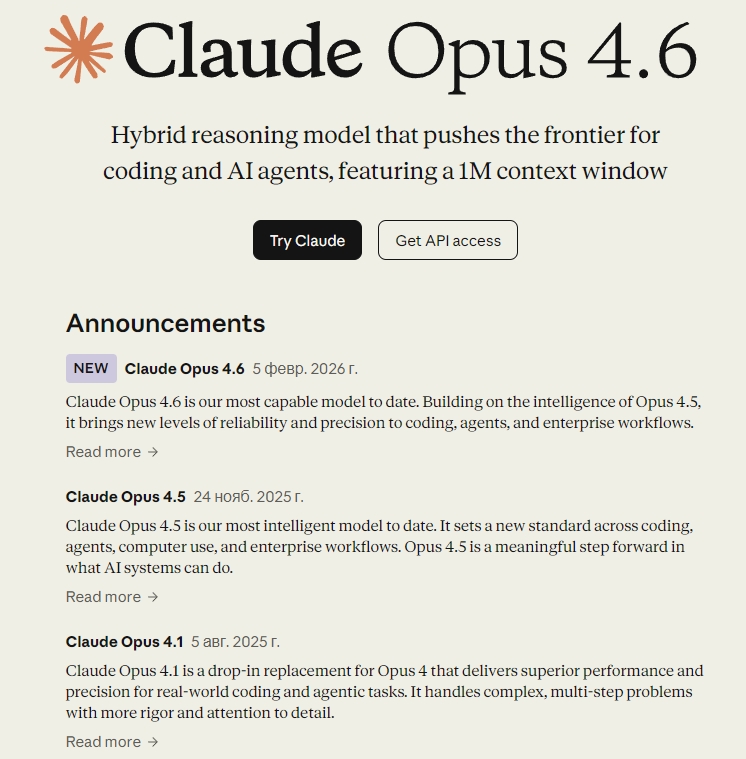
Anthropic’s Claude is charting unexplored territory in the world of creative writing. This advanced AI isn’t content with just factual summaries; it possesses a nuanced understanding of language that extends to imaginative prose and poetry. For aspiring writers and established authors alike, Claude offers an innovative tool to break through creative blocks, explore new styles, or simply generate ideas.
Its “balanced Claude” approach ensures coherent, contextually relevant, and often surprisingly evocative output. This language model stands as a testament to how AI can elevate human creativity, making it a true pioneer in the art of digital storytelling and verse creation.
Decoding Sonnet Structure for AI Generation
For an AI to generate a sonnet, it must first ‘decode’ the form’s intricate structure. This involves recognizing the specific number of lines, the typical syllable count per line (often iambic pentameter), and the division into quatrains and tercets. The AI identifies these underlying patterns, much like a blueprint for construction. It understands the common progression of ideas within a sonnet – perhaps an argument or a problem posed in the first part, resolved or reflected upon in the latter. This foundational structural comprehension allows the sonnet model to build its verse systematically, ensuring the output adheres to the expected framework.
Rhyme Schemes and Meter
Mastering rhyme schemes and meter presents a significant challenge for AI, yet Claude handles it with impressive dexterity. A sonnet isn’t just 14 lines; it often follows a precise pattern of rhymes, like ABAB CDCD EFEF GG for a Shakespearean sonnet, or ABBAABBA CDECDE for a Petrarchan. The AI must select words that not only make sense but also create the correct sonic connections. Simultaneously, it manages meter, typically iambic pentameter, where lines consist of ten syllables with an alternating unstressed/stressed pattern. Claude’s underlying algorithms meticulously track these phonetic and rhythmic requirements, weaving words together to form a cohesive, metrically sound, and correctly rhymed Claude sonnet.
How Claude Generates Creative and Structured Text
Claude employs a sophisticated blend of contextual understanding and predictive modeling to generate creative and structured text. When tasked with a Claude Code Sonnet, it first processes the prompt to grasp the desired theme, tone, and specific sonnet form. Then, leveraging its vast training data, it recalls patterns of language, imagery, and poetic devices. It constructs the text line by line, constantly evaluating word choices against internal representations of rhyme, meter, and coherence. This iterative process ensures that each new word not only fits syntactically and semantically but also adheres to the overarching poetic structure, resulting in a cohesive and often imaginative output. The advanced “sonnet model” within Claude makes this possible.
Effective Prompt Engineering for Poetic Output
Effective prompt engineering is key to unlocking Claude’s full poetic potential. Think of your prompt as a detailed set of instructions for a master craftsman. Instead of vague commands, provide specific details: specify the sonnet type (e.g., Shakespearean), the desired theme, potential imagery, and even a preferred mood. Mentioning “claude sonnet” in your prompt can help focus its generation. The more precise and descriptive your input, the more tailored and high-quality your poetic output will be. Experiment with different phrasing and levels of detail to guide Claude towards your vision, turning a simple request into a rich, poetic directive.
Guiding Tone and Theme
Guiding tone and theme within your prompts is crucial for a compelling Claude sonnet. Don’t just ask for a sonnet; instruct Claude on the emotional landscape. Do you want melancholic reflections or joyous celebration? A serious contemplation or a lighthearted observation? Provide keywords that evoke the desired sentiment. For theme, clearly state the subject matter: nature’s beauty, lost love, future possibilities. You might even give Claude a specific opening line or a closing couplet to anchor the narrative. By precisely defining these elements, you empower Claude to craft a poem that truly resonates with your artistic intent, showcasing its “sonnet capabilities”.
Essential Elements of a High-Quality Claude Sonnet
A high-quality Claude Code Sonnet goes beyond just meeting structural requirements. It needs a compelling narrative or thematic development that unfolds naturally across its 14 lines. Look for evocative imagery, fresh metaphors, and a consistent voice. The language should feel authentic, not merely procedural. A truly excellent Claude sonnet will demonstrate a clear understanding of its subject, presenting ideas with clarity and poetic grace. The rhymes should feel natural, not forced, and the meter should flow smoothly. Ultimately, it should leave the reader with a sense of completion and a spark of genuine artistry, reflecting the advanced “sonnet capabilities” of the model.
Exploring Different Sonnet Types with Claude
Claude offers an exciting opportunity to explore the diverse world of sonnet types. While the traditional forms are well-known, history boasts many variations, and Claude can adapt to most of them. You’re not limited to just one style! Experiment with an Spenserian sonnet, with its interlocking rhyme scheme, or delve into a more modern, less rigid structure. Claude’s flexibility means you can push the boundaries of what a sonnet can be, generating unique pieces that still honor the spirit of the form. This allows for endless creative exploration, moving beyond convention to discover new poetic expressions with “sonnet model” technology.
Shakespearean vs. Petrarchan Forms
When diving into sonnets with Claude, understanding the fundamental differences between Shakespearean and Petrarchan forms is key. The Shakespearean (or English) sonnet follows an ABAB CDCD EFEF GG rhyme scheme, ending with a distinct rhyming couplet that often provides a summary or twist. Its structure typically presents a problem or idea in the first three quatrains and a resolution in the couplet. In contrast, the Petrarchan (or Italian) sonnet uses an ABBAABBA rhyme scheme for its octave (first eight lines), often presenting a problem. The sestet (final six lines) then offers a resolution, with a CDECDE or CDCDCD rhyme scheme. Claude can skillfully navigate these distinct structures, generating authentic examples of both, showcasing its impressive “sonnet capabilities”.
Challenges and Nuances in AI Poetry Creation
Creating poetry with AI, even with advanced models like Claude, presents unique challenges and nuances.
Achieving genuine emotional depth or complex philosophical insights remains an area for growth. While Claude excels at structure and syntax, infusing truly novel metaphors or profound human experiences can be tricky. Sometimes, the language might feel too generic or predictable.
Balancing adherence to form with creative originality requires fine-tuning and careful prompt engineering. The AI might also struggle with highly abstract concepts, occasionally producing verses that are technically correct but lack genuine poetic resonance. These subtleties highlight the ongoing development in AI’s journey towards true artistry.
The Broader Impact of AI on Art and Literature
The rise of AI-powered creative tools like the Claude Code Sonnet extends far beyond simple text generation; it’s reshaping the landscape of art and literature.
AI can democratize creativity, making poetic expression accessible to a wider audience. It introduces new methods for generating ideas, overcoming writer’s block, and even co-creating original works.
This technological shift prompts critical questions about authorship, originality, and the very definition of creativity. As AI continues to evolve, it promises to be a catalyst for new genres, forms, and conversations, pushing artists and writers to explore uncharted territories and redefine their roles in an increasingly digital world.
Practical Applications of Claude’s Poetic Abilities
Claude’s poetic abilities, exemplified by the Claude Code Sonnet, offer several practical applications. Imagine personalized greeting cards, unique social media captions, or even educational tools for studying poetic forms. Businesses can use it for creative marketing copy or branding that requires a distinctive, poetic voice. Storytellers can generate verse interludes for narratives or develop character backstories with poetic flair. Even in fields like therapy, crafting personalized poems might offer a novel way to explore emotions. The ability to quickly generate structured, expressive text provides a versatile asset for a multitude of creative and communicative needs.

Ethical Considerations in AI-Assisted Creativity
The burgeoning field of AI-assisted creativity brings forth important ethical considerations. When Claude generates a Claude Code Sonnet, questions arise about intellectual property: who truly ‘owns’ the poem? Is it the AI, the developer, or the prompt engineer? There’s also the risk of diminishing human creative effort if AI-generated content becomes indistinguishable from human work. We must consider transparency – clearly distinguishing AI-created art from human art. Ensuring fair use of training data, avoiding bias in generated content, and fostering responsible development are paramount. Navigating these ethical waters responsibly ensures AI enhances creativity without undermining its intrinsic human value.
Comparing Claude’s Poetic Prowess with Other Models
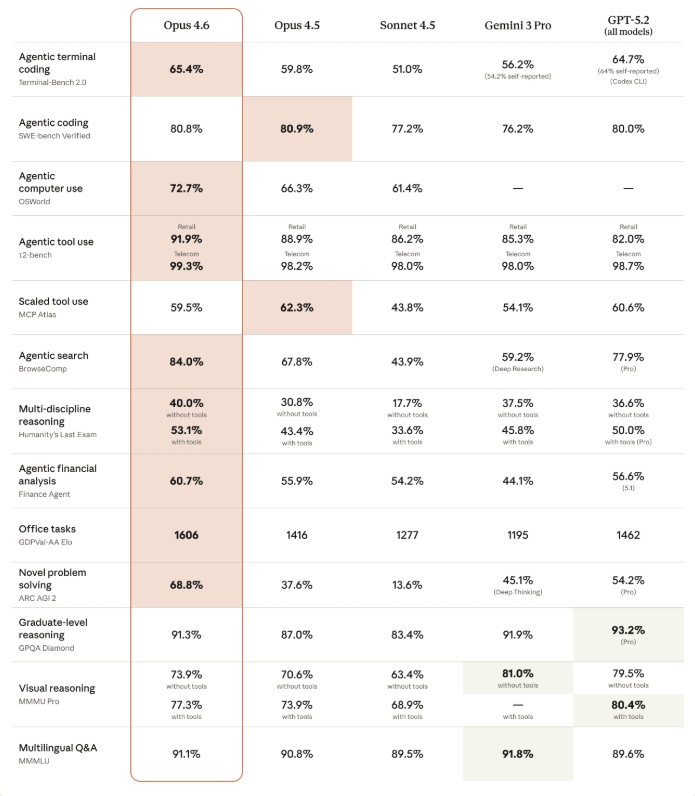
In the evolving landscape of AI-generated poetry, Claude distinguishes itself with its focused approach and nuanced capabilities. While many language models can generate text, Claude, particularly the sonnet model, excels in adhering to complex structural constraints like rhyme and meter with remarkable consistency. Other models might produce more abstract or free-form verse, but Claude often demonstrates a stronger command of classical poetic forms. Its “balanced Claude” nature allows for both creativity and adherence to rules, striking a unique equilibrium. This specialization in structured output, combined with its ability to maintain coherence, positions Claude as a frontrunner for generating precise and artful verse.
A Step-by-Step Guide to Creating Your Own Claude Sonnet
Ready to unleash your inner poet with AI? Creating your own Claude Code Sonnet is an exciting process. Follow these simple steps to guide Claude towards your vision:
- Choose Your Theme: Decide what your sonnet will be about. Love, nature, technology, a specific emotion?
- Select Your Sonnet Type: Will it be Shakespearean, Petrarchan, or another form? Specifying this helps Claude structure its output.
- Craft Your Core Idea: What central message or question do you want your sonnet to convey?
- Define Tone and Mood: Do you want it to be joyful, somber, reflective, or humorous?
- Provide Specific Keywords: Include important words or phrases you want to see incorporated.
- Iterate and Refine: Don’t settle for the first output. Adjust your prompt based on initial results.
With careful guidance, you’ll produce stunning, AI-crafted verse.
Initial Prompt Design
Your journey to a perfect Claude Code Sonnet begins with a strong initial prompt. Think of it as painting the canvas for Claude. Clearly state your intent: “Generate a Shakespearean sonnet.” Then, layer in the details. What’s the central theme? “on the fleeting nature of autumn leaves.” Specify the mood: “with a melancholic yet appreciative tone.” You might even suggest an opening line or a key image: “Start with ‘The golden tapestry begins to fray.'” Be concise yet comprehensive. A well-designed prompt sets the stage for Claude to deliver a poem that aligns perfectly with your creative vision, leveraging its “sonnet capabilities”.
Iteration and Refinement
Rarely does the perfect Claude sonnet emerge from a single prompt. Iteration and refinement are crucial steps in polishing your AI-generated poetry. Review the initial output critically. Does the meter flow? Are the rhymes natural? Does the theme fully develop? If not, adjust your prompt. Perhaps you need to refine a keyword, specify a different emotion, or even guide a particular line of thought. You might ask Claude to “revise the third quatrain to include more vivid imagery” or “make the final couplet more impactful.” This back-and-forth process allows you to sculpt Claude’s output, transforming a good draft into an exceptional piece of AI-assisted verse.
Resources for Aspiring AI Poets
Embarking on your journey as an AI poet means tapping into valuable resources. Start by exploring Anthropic’s official documentation for Claude to understand its functionalities better. Numerous online communities and forums dedicated to AI art and creative writing offer platforms for sharing your Claude Code Sonnet creations and learning from others. Look for tutorials on prompt engineering specific to poetic generation. Reading classic sonnets will also deepen your appreciation for the form, helping you guide Claude more effectively. Engaging with these resources will enhance your skills, allowing you to master the art of co-creating poetry with advanced language models.
Frequently Asked Questions
What is a Claude Code Sonnet?
A Claude Code Sonnet is a 14-line poem, adhering to specific rhyme schemes and meter, generated by Anthropic’s sophisticated Claude language model. It’s Claude’s interpretation of a classic sonnet, showcasing its ability to emulate human creativity within defined poetic constraints.
How does Claude generate creative and structured text?
Claude uses a sophisticated blend of contextual understanding and predictive modeling. It processes the prompt, leverages vast training data to recall language patterns, and constructs text line by line, constantly evaluating word choices against internal representations of rhyme, meter, and coherence to adhere to the poetic structure.
What is “prompt engineering” for poetic output with Claude?
Prompt engineering is the process of providing specific and detailed instructions to Claude, such as the sonnet type (e.g., Shakespearean), desired theme, potential imagery, or preferred mood. More precise prompts lead to more tailored and high-quality poetic output.
What are the main differences between Shakespearean and Petrarchan sonnets?
Shakespearean (English) sonnets follow an ABAB CDCD EFEF GG rhyme scheme with a concluding couplet, often presenting a problem resolved in the couplet. Petrarchan (Italian) sonnets use an ABBAABBA rhyme for the octave (problem) and a CDECDE or CDCDCD for the sestet (resolution).
What are some practical applications of Claude’s poetic abilities?
Claude’s poetic abilities can be applied to creating personalized greeting cards, unique social media captions, educational tools for studying poetic forms, creative marketing copy, verse interludes for narratives, or even for exploring emotions in therapeutic contexts.