


Step into a new era of software development. Imagine an AI partner that truly understands your code, your intent, and your complex challenges. That’s the power of Claude Code Opus, the most capable Claude model designed specifically for the rigorous demands of engineering teams. It’s more than just a coding assistant; it’s a transformative tool ready to redefine your workflow.
We’re talking about a leap in AI capability, delivering unparalleled precision and context awareness. Claude Code Opus isn’t just about generating snippets; it’s about deeply engaging with your project, providing insightful solutions, and becoming an indispensable extension of your development process. Prepare to experience intelligent assistance like never before.
- Understanding Claude Code Opus for Modern Development
- Core Capabilities and What Sets Claude Code Opus Apart
- Key Features Tailored for Software Engineers
- Intelligent Code Generation and Completion
- Advanced Debugging and Error Resolution
- Enhancing Every Stage of the Development Workflow
- Practical Applications of Claude Code Opus in Real-World Scenarios
- Accelerating Project Timelines and Feature Development
- Getting Started: Setting Up and Integrating Claude Code Opus
- Boosting Developer Productivity with AI-Driven Insights
- Mastering Prompt Engineering for Optimal Code Opus Performance
- Claude Code Opus in the AI Assistant Landscape
- Performance and Functionality Comparison
- Advanced Use Cases: From Refactoring to Architecture Design
- The Future of AI-Assisted Coding with Claude Code Opus
- Best Practices for Maximizing Your Claude Code Opus Potential
- Addressing Common Challenges and Troubleshooting Tips
- Ensuring Data Security and Confidentiality with Claude Code Opus
- Community Support and Resources for Code Opus Users
- Why Every Developer Needs to Integrate Claude Code Opus into Their Stack
- Frequently Asked Questions
Understanding Claude Code Opus for Modern Development
Modern development faces relentless pressure: faster delivery cycles, intricate system designs, and an ever-expanding technology landscape. Claude Code Opus directly addresses these challenges. It’s an advanced AI model specifically engineered to comprehend complex coding problems and offer sophisticated solutions.
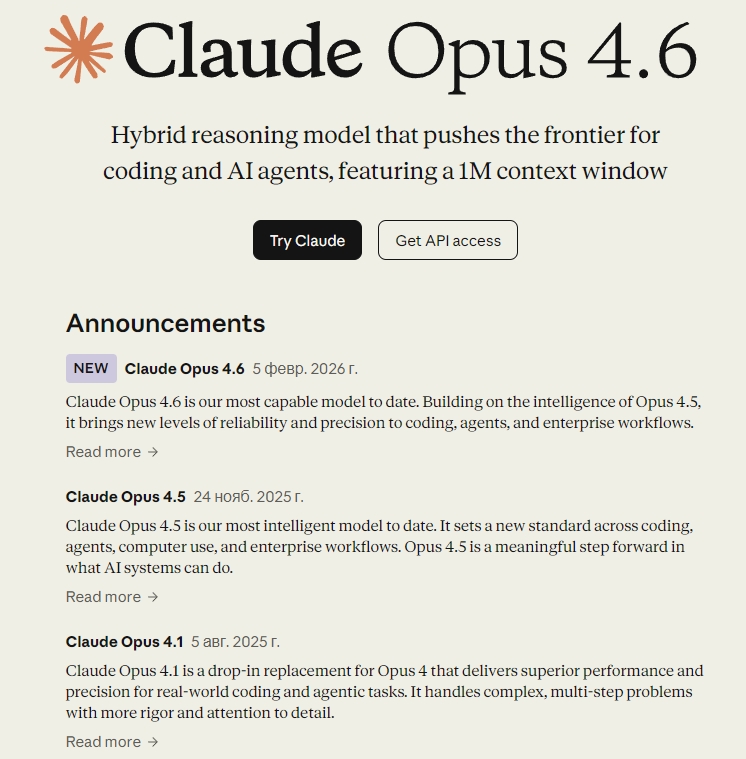
Think of the opus model as your highly knowledgeable pair-programming partner, always available. It understands multiple programming languages, frameworks, and architectural patterns. This deep comprehension allows it to provide relevant, context-aware assistance, moving beyond simple syntax suggestions to truly impact your project’s technical direction and implementation.
Core Capabilities and What Sets Claude Code Opus Apart
Claude Code Opus distinguishes itself with a suite of unique capabilities that elevate it above standard AI tools. It possesses an exceptional ability to process vast amounts of information and maintain long conversational contexts, crucial for tackling large codebases and intricate problems.
Here are just a few aspects that make Claude Code Opus stand out:
- Unparalleled Context Window: It processes massive code chunks, understanding the full scope of your project, not just isolated files.
- Advanced Reasoning: The opus model goes beyond pattern matching; it reasons through logical steps, identifying optimal solutions for complex algorithms and architectural dilemmas.
- Nuanced Language Understanding: Claude Code Opus grasps subtle instructions and intent, translating your high-level ideas into precise, actionable code.
- Commitment to Safety: Engineered with responsible AI principles, it helps mitigate the generation of insecure or problematic code.
This isn’t just about speed; it’s about intelligent, reliable, and secure assistance that you can trust.
Key Features Tailored for Software Engineers
Claude Code Opus brings a targeted set of features designed to directly impact the daily life of a software engineer. Its capabilities stretch across the entire development spectrum, from initial design phases to final deployment and maintenance. Every feature aims to reduce cognitive load and accelerate output.

Engineers gain a powerful ally that adapts to their specific needs and workflows. The focus is on practical, immediate value, helping teams build better software, faster. Let’s dive into some of the standout opus features.
Intelligent Code Generation and Completion
Say goodbye to boilerplate and repetitive coding tasks. Claude Code Opus excels at generating high-quality code snippets, functions, and even entire classes based on your natural language descriptions or existing code context. This goes far beyond simple autocomplete.
Imagine:
- Providing a user story and getting a robust function prototype.
- Requesting an API endpoint, complete with error handling and documentation.
- Automatically completing complex data structures or design patterns with minimal input.
The opus model learns your project’s style and conventions, producing consistent and readable code that integrates seamlessly. It significantly reduces the time spent on initial implementation, letting you focus on higher-level problem-solving and innovation.
Advanced Debugging and Error Resolution
Debugging can be a time sink, consuming valuable development hours. Claude Code Opus transforms this process. It intelligently analyzes error messages, stack traces, and your codebase to pinpoint the root cause of issues with incredible accuracy.
The most capable Claude doesn’t just tell you there’s an error; it explains why it occurred and suggests precise fixes. You gain actionable insights:
- Identifying subtle logic flaws.
- Suggesting missing imports or incorrect dependencies.
- Proposing refactors to prevent future bugs.
This capability dramatically reduces debugging cycles, accelerating issue resolution and improving overall code quality. It turns frustrating error hunts into quick, guided solutions.
Enhancing Every Stage of the Development Workflow
Claude Code Opus integrates seamlessly into every phase of your software development lifecycle, transforming how you approach tasks from inception to deployment. It’s not a standalone tool but an intelligent layer that augments human capabilities at each step.
Consider the impact:
- Planning & Design: Get help sketching out architectural patterns, data models, or API specifications.
- Coding & Implementation: Accelerate coding with generation, completion, and refactoring suggestions.
- Testing & Debugging: Generate test cases, analyze errors, and suggest fixes for robust applications.
- Documentation: Automatically generate comments, docstrings, or even full project documentation.
- Maintenance & Optimization: Identify performance bottlenecks, suggest optimizations, and simplify complex legacy code.
This holistic approach ensures that Claude Code Opus acts as a continuous, intelligent partner, driving efficiency and quality throughout your entire project.
Practical Applications of Claude Code Opus in Real-World Scenarios
The versatility of Claude Code Opus shines brightest in practical, everyday development scenarios. Engineers leverage its power to tackle a diverse range of tasks, unlocking new levels of efficiency and innovation across various projects and domains.
Here are just a few ways teams utilize the opus model:
| Scenario | How Claude Code Opus Helps |
|---|---|
| Building new microservices | Generates boilerplate code, API endpoints, and database interactions swiftly. |
| Refactoring legacy codebases | Identifies areas for improvement, suggests cleaner patterns, and automates tedious rewrites. |
| Developing complex algorithms | Assists in designing efficient logic, optimizing for performance, and handling edge cases. |
| Cross-language development | Translates concepts or even code snippets between different programming languages. |
| Creating unit and integration tests | Generates comprehensive test suites for new or existing functions, ensuring coverage. |
Claude Code Opus turns challenging tasks into manageable ones, enabling developers to deliver high-quality solutions with greater speed and confidence.
Accelerating Project Timelines and Feature Development
One of the most profound impacts of Claude Code Opus is its ability to significantly compress project timelines and accelerate the pace of feature development. By automating routine tasks and providing intelligent assistance, the most capable Claude frees up valuable developer time, allowing teams to deliver value faster.
Imagine this:
- Reducing the initial setup time for new features from days to hours.
- Minimizing the back-and-forth debugging, pushing code to production quicker.
- Empowering developers to tackle more complex tasks by offloading simpler coding.
Claude Code Opus directly contributes to meeting aggressive deadlines, enabling teams to be more agile and responsive to market demands. This acceleration doesn’t come at the cost of quality; in many cases, the AI-driven suggestions lead to more robust and optimized code from the start.
Getting Started: Setting Up and Integrating Claude Code Opus
Integrating Claude Code Opus into your development environment is a straightforward process, designed for quick adoption. You don’t need a steep learning curve to begin harnessing the power of the opus model; most developers can get up and running rapidly.
Typically, getting started involves:
- Accessing the API: Obtain your API key or access credentials for Claude Code Opus.
- Choosing your Integration Method: Select your preferred client library or plugin (e.g., Python SDK, VS Code extension).
- Configuration: Set up your environment variables or configuration files with your API key.
- Initial Prompting: Begin sending your first coding queries or instructions to Claude Code Opus.
Many developers find it beneficial to start with small, isolated tasks to familiarize themselves with its responses and capabilities. The goal is to make the powerful opus features a natural extension of your existing tools and processes.
Boosting Developer Productivity with AI-Driven Insights
Claude Code Opus doesn’t just assist with coding; it fundamentally enhances developer productivity by providing intelligent, AI-driven insights. It acts as an invaluable knowledge base and a proactive problem-solver, empowering engineers to work smarter, not just harder.
Consider how the opus model boosts your output:
- Knowledge Amplification: Quickly understand unfamiliar code, complex APIs, or new technologies without extensive research.
- Best Practice Guidance: Receive suggestions for adhering to coding standards, security best practices, and performance optimizations.
- Automated Documentation: Generate clear, concise documentation for your code, saving precious time.
- Cognitive Load Reduction: Offload mental effort for repetitive or intricate tasks, freeing your mind for creative problem-solving.
The most capable Claude empowers you to focus on innovation and high-value work, significantly elevating your overall productivity.
Mastering Prompt Engineering for Optimal Code Opus Performance
Unlocking the full potential of Claude Code Opus lies in mastering prompt engineering. Crafting clear, precise, and context-rich prompts directly impacts the quality and relevance of the AI’s responses. Think of it as communicating effectively with an exceptionally intelligent colleague.
Here are key strategies for getting the best from the opus model:
- Be Specific: Clearly state your goal, the desired language, and any constraints.
- Provide Context: Include relevant code snippets, file structures, or architectural details.
- Define the Persona: Ask Claude Code Opus to act as a “senior architect,” “security expert,” or “Python specialist.”
- Iterate and Refine: Don’t hesitate to follow up with clarifying questions or additional instructions.
- Specify Output Format: Request JSON, Markdown, or specific code structures.
Experimentation is key. As you practice, you’ll develop an intuitive understanding of how to guide Claude Code Opus to deliver exactly what you need for optimal opus performance.
Claude Code Opus in the AI Assistant Landscape
The landscape of AI assistants for developers is constantly evolving, but Claude Code Opus firmly establishes itself as a leader. It stands out by offering a unique blend of deep contextual understanding, advanced reasoning, and an expansive knowledge base tailored for complex engineering challenges.
While many tools offer basic code completion, the most capable Claude goes further. It participates in intricate discussions, understands architectural implications, and helps you navigate ambiguous problem statements. This positions the opus model not just as a productivity tool, but as a strategic partner in the AI-assisted development space.
Performance and Functionality Comparison
When evaluating Claude Code Opus against other AI assistants, its performance and functionality consistently impress. The opus features are designed for complex, real-world development, not just simple scripting.
Key areas where Claude Code Opus demonstrates superior performance include:
- Long Context Windows: Handling entire files or multiple related files without losing context.
- Complex Problem Solving: Reasoning through intricate algorithms, data structures, and architectural decisions.
- Nuance and Idiomatic Code: Generating code that aligns with specific language idioms and best practices, not just functional code.
- Reduced Hallucinations: Delivering more factually accurate and reliable code suggestions compared to many alternatives.
Developers consistently report that Claude Code Opus provides more actionable, higher-quality output, especially for demanding tasks. This makes the most capable Claude a preferred choice for serious development work.
Advanced Use Cases: From Refactoring to Architecture Design
Claude Code Opus isn’t just for daily coding tasks; its advanced capabilities unlock sophisticated use cases that dramatically impact large-scale projects. Leverage its power for strategic development initiatives, pushing the boundaries of what’s possible with AI assistance.
Consider these advanced applications:
- Strategic Refactoring: Analyze large codebases to identify technical debt, suggest modularization strategies, and automate complex refactoring processes.
- Architecture Review and Design: Present architectural diagrams or high-level requirements and receive feedback, alternative approaches, or detailed design specifications.
- Security Vulnerability Assessment: Review code for potential security flaws, suggest mitigations, and help implement secure coding practices.
- Performance Optimization: Identify bottlenecks in existing systems and propose targeted optimizations for algorithms, database queries, or network communication.
- Migration Planning: Assist in planning and executing migrations between frameworks, languages, or cloud providers by generating conversion strategies and tools.
The opus model becomes an invaluable asset for critical, high-impact development initiatives.
The Future of AI-Assisted Coding with Claude Code Opus
The future of AI-assisted coding is here, and Claude Code Opus is at its forefront. This isn’t a fleeting trend; it represents a fundamental shift in how we build and maintain software. The continuous evolution of the opus model promises even more sophisticated capabilities, pushing the boundaries of developer productivity and creativity.
Expect future iterations to integrate even more deeply into development environments, anticipate needs proactively, and seamlessly adapt to emerging technologies. The role of the developer will evolve, moving from mundane tasks to higher-level design, innovation, and strategic problem-solving, all amplified by the intelligent partnership of Claude Code Opus. We are witnessing the dawn of truly symbiotic human-AI development.
Best Practices for Maximizing Your Claude Code Opus Potential
To truly harness the immense power of Claude Code Opus, adopting best practices is essential. These guidelines help you get the most out of the opus model, transforming it into an indispensable part of your daily workflow and ensuring you leverage its full potential.
- Start Small, Then Scale: Begin with well-defined, isolated tasks before tackling complex, interconnected problems.
- Iterate Your Prompts: Refine your questions and instructions based on the AI’s responses to guide it closer to your desired outcome.
- Review and Verify: Always critically review generated code for correctness, security, and adherence to your project standards. Claude Code Opus is a powerful assistant, not a replacement for human oversight.
- Provide Examples: When generating code, include examples of your existing code or desired output format.
- Leverage Context: Feed Claude Code Opus relevant surrounding code or documentation to give it a richer understanding.
- Understand Limitations: While the most capable Claude is powerful, it still has limitations. Know when to rely on your own expertise.
By following these practices, you’ll quickly become proficient at collaborating effectively with Claude Code Opus, boosting your productivity significantly.
Addressing Common Challenges and Troubleshooting Tips
Even with advanced tools like Claude Code Opus, developers occasionally encounter challenges. Knowing how to address common issues quickly ensures a smooth and productive experience. Most “problems” often stem from how you interact with the opus model, not inherent flaws.
Here are some troubleshooting tips:
- Issue: Code isn’t quite right.
Tip: Refine your prompt. Be more specific about the language, framework, or desired output. Add contextual code snippets. Ask for explanations of its choices.
- Issue: Response is too generic or verbose.
Tip: Specify the desired length or format. For example, “Provide a concise Python function” or “Give me only the code, no explanation.”
- Issue: Claude Code Opus seems to “forget” previous context.
Tip: Ensure you are working within a session that supports the necessary context window. For very long conversations, sometimes a fresh, well-summarized prompt is best.
- Issue: Performance is slow.
Tip: Check your API connection and usage limits. Large, complex prompts can take longer to process, so try breaking them down.
Remember, clear communication is key. The more precise you are with Claude Code Opus, the better and faster your results will be.
Ensuring Data Security and Confidentiality with Claude Code Opus
When integrating an AI assistant into your development workflow, data security and confidentiality are paramount concerns. Claude Code Opus is built with robust safeguards and design principles to protect your sensitive code and proprietary information.
Anthropic, the creator of the opus model, prioritizes responsible AI development. This includes:
- Strict Access Controls: Your data and prompts remain confidential.
- Data Encryption: Information is encrypted both in transit and at rest.
- No Training on Customer Data (by default): Unless explicitly opted in, your interactions with Claude Code Opus do not train future models, ensuring your proprietary code remains yours.
- Compliance Standards: Adherence to industry-standard security protocols and certifications.
Always review the specific data governance policies provided by Anthropic to understand how your information is handled. This transparency empowers you to integrate Claude Code Opus with confidence, knowing your intellectual property is safeguarded.
Community Support and Resources for Code Opus Users
You’re not alone on your journey with Claude Code Opus. A vibrant community and extensive resources exist to support you, ensuring you get the most out of the most capable Claude model. Connecting with other users and leveraging available documentation accelerates your learning and problem-solving.
Explore these valuable resources:
- Official Documentation: Comprehensive guides, API references, and tutorials provided by Anthropic.
- Developer Forums & Communities: Platforms where you can ask questions, share insights, and collaborate with other Code Opus users.
- Tutorials and Blog Posts: A growing collection of community-contributed content showcasing practical applications and advanced techniques.
- Webinars and Workshops: Opportunities to learn directly from experts and deepen your understanding of the opus features.
Engage with these resources to share your experiences, discover new use cases, and contribute to the collective knowledge base surrounding Claude Code Opus.
Why Every Developer Needs to Integrate Claude Code Opus into Their Stack
The question isn’t whether AI will transform development, but how quickly you embrace its power. Integrating Claude Code Opus isn’t just an upgrade; it’s a strategic imperative for any developer or team looking to stay competitive and innovative. This is the most capable Claude, built for the challenges of today and the opportunities of tomorrow.
You gain an unparalleled partner that accelerates coding, simplifies complex debugging, and offers insightful architectural guidance. Claude Code Opus boosts your productivity, enhances code quality, and frees you to focus on truly creative and high-impact work. Don’t get left behind; empower yourself with the ultimate AI assistant. Join the developers who are already transforming their workflow with Claude Code Opus.
Frequently Asked Questions
What is Claude Code Opus?
Claude Code Opus is the most capable Claude model, specifically designed as an AI partner for engineering teams. It understands complex code, intent, and challenges, providing insightful solutions to redefine the software development workflow.
What core capabilities set Claude Code Opus apart from other AI tools?
Claude Code Opus distinguishes itself with an unparalleled context window for processing large codebases, advanced reasoning to solve complex algorithms, nuanced language understanding for precise instructions, and a commitment to safety in code generation.
How does Claude Code Opus enhance the debugging and error resolution process?
It intelligently analyzes error messages, stack traces, and your codebase to pinpoint the root cause of issues, explain their occurrence, and suggest precise fixes. This capability dramatically reduces debugging cycles and improves overall code quality.
What are the best practices for maximizing the potential of Claude Code Opus?
To maximize its potential, developers should start with small tasks, iterate and refine their prompts, critically review and verify all generated code, provide examples, leverage contextual information, and understand the AI’s limitations.
How does Claude Code Opus ensure data security and confidentiality?
Anthropic, its creator, prioritizes responsible AI development with strict access controls, data encryption in transit and at rest, and a default policy of not training future models on customer data (unless explicitly opted in), ensuring proprietary code remains confidential.