


- What is Claude Code? An Overview
- Core Capabilities for Developers
- How Anthropic Structures Claude Code Pricing
- Key Factors Influencing Claude Code Pricing
- Breaking Down Claude’s API Pricing Model
- Input Token Cost Explained
- Output Token Cost Explained
- Comparing Claude Opus, Sonnet, and Haiku Pricing
- Enterprise vs. Developer Pricing for Claude Code
- Estimating Your Claude Code Usage Costs
- Tips for Optimizing Your Claude Code Spend
- Claude Code Pricing vs. Competitor AI Models
- Real-World Use Cases and Their Pricing Implications
- Understanding Anthropic’s Free Tier and Trial Programs
- Billing Cycles and Transparency in Claude Code Pricing
- Security and Data Privacy Considerations with Claude Code
- Future Trends in Claude Code Pricing and Evolution
- Frequently Asked Questions About Claude Code Pricing
- Frequently Asked Questions
What is Claude Code? An Overview
Claude Code represents a specialized facet of Anthropic’s powerful AI family, finely tuned for complex programming tasks. It’s not just a conversational model; it’s an intelligent assistant designed to understand, generate, and debug code across numerous languages. Developers leverage Claude Code to streamline workflows, accelerate development cycles, and enhance software quality.
This dedicated iteration of Claude offers remarkable accuracy and contextual understanding, making it an indispensable tool for tackling intricate coding challenges. From crafting elegant solutions to refining existing codebases, Claude Code provides a robust foundation for modern software creation.

Core Capabilities for Developers
Claude Code empowers developers with a suite of advanced features designed to enhance productivity and innovation. Its specialized training allows it to excel in highly technical environments.
- Code Generation: Quickly produce boilerplate, functions, or entire scripts based on natural language prompts.
- Debugging Assistance: Identify errors, suggest fixes, and explain complex bugs in your code.
- Refactoring and Optimization: Receive recommendations for improving code efficiency, readability, and structure.
- Language Translation: Convert code snippets from one programming language to another with high fidelity.
- Documentation Creation: Automatically generate clear and comprehensive documentation for your functions and modules.
- API Integration Support: Understand and assist with integrating various APIs into your applications.
These capabilities transform the development process, freeing up engineers to focus on higher-level architectural design and innovative problem-solving.
How Anthropic Structures Claude Code Pricing
Anthropic adopts a usage-based approach for Claude Code Pricing, ensuring you pay only for what you consume. This flexible cost structure aligns expenses directly with your project’s demands, scaling seamlessly from small experiments to large-scale deployments.
Instead of fixed monthly fees across the board, Anthropic measures usage primarily through tokens – discrete units of text processed by the model.
The core philosophy behind this model is fairness and efficiency. You’ll find different rates apply based on the specific Claude model you choose and the direction of the data flow – whether you’re sending information to the AI (input) or receiving its generated response (output). This tiered system allows for precise cost management tailored to your operational needs.
Key Factors Influencing Claude Code Pricing
Several critical elements dictate your overall Claude Code Pricing. Understanding these factors helps you accurately predict and manage your expenses with Anthropic’s powerful AI.
The primary influences on your Claude costs include:
- Model Choice: Different Claude models (Opus, Sonnet, Haiku) offer varying levels of intelligence and speed, each with its own price point.
- Token Usage: This is the most significant factor. The amount of text you input to the model and the amount of text it generates in response directly impacts your bill.
- API Calls: While token usage is paramount, the frequency and complexity of your API interactions can also play a subtle role in overall resource consumption.
- Region and Infrastructure: Depending on the geographical region where you deploy and access the API, slight variations in underlying infrastructure costs might apply, though token pricing remains the dominant force.
- Service Tier/Volume: Enterprise customers or those with very high-volume requirements may qualify for custom agreements or bulk discounts, differing from standard developer rates.
By monitoring these variables, you gain greater control over your Claude pricing, ensuring optimal expenditure.
Breaking Down Claude’s API Pricing Model
Anthropic’s API pricing model for Claude Code is built on a clear, token-based system, making it predictable and scalable. You interact with the AI via its API, sending prompts and receiving responses. Each piece of this communication, whether your input or Claude’s output, is broken down into “tokens.” These tokens are the fundamental units of measurement for your Claude costs.
This granular approach allows for precise billing. You’re not paying for idle time or fixed computational blocks; you’re directly compensating for the actual amount of data processed during your interactions. Understanding this token-centric model is key to mastering your overall Claude Code Pricing.
Input Token Cost Explained
Input tokens represent the data you send to the Claude AI model. Think of them as the words, characters, or code snippets you feed into the system to ask a question, provide context, or request a generation. Anthropic calculates your Claude costs based on the number of these input tokens.
For example, if you provide a long piece of existing code for Claude to review or debug, that entire code snippet contributes to your input token count. Each model (Opus, Sonnet, Haiku) has a specific rate per thousand input tokens. Sending more detailed prompts or larger codebases naturally results in higher input token usage, directly influencing your Claude pricing for that interaction.
Output Token Cost Explained
It’s important to note that output token rates are often different, and sometimes higher, than input token rates, reflecting the computational effort in generating novel content. This distinction is a core part of Claude Code Pricing.
Output tokens are the data generated by the Claude AI model in response to your input. These are the answers, the new code, the summaries, or the debug suggestions Claude produces for you. Just like input tokens, output tokens incur specific Claude costs based on their quantity.
Typically, generating more extensive responses or longer code blocks means a higher output token count. For instance, if you ask Claude to write an entire complex function, the length of that generated function directly determines your output token expense.
Comparing Claude Opus, Sonnet, and Haiku Pricing
Anthropic offers distinct Claude models, each tailored for different needs and performance levels, which naturally translates into varied Claude Code Pricing. Choosing the right model is crucial for balancing capability with your budget.
Here’s a breakdown of how Opus, Sonnet, and Haiku generally compare in terms of Claude costs:
| Model | Primary Use Case | Speed | Intelligence/Capability | Relative Cost |
|---|---|---|---|---|
| Claude Opus | Highly complex tasks, research, strategic analysis, advanced code generation. | Fast | Highest | Highest |
| Claude Sonnet | Balanced performance, robust enterprise use, data processing, reliable coding assistance. | Faster | High | Medium |
| Claude Haiku | Quick, lightweight tasks, rapid responses, simple code snippets, high throughput. | Fastest | Good | Lowest |
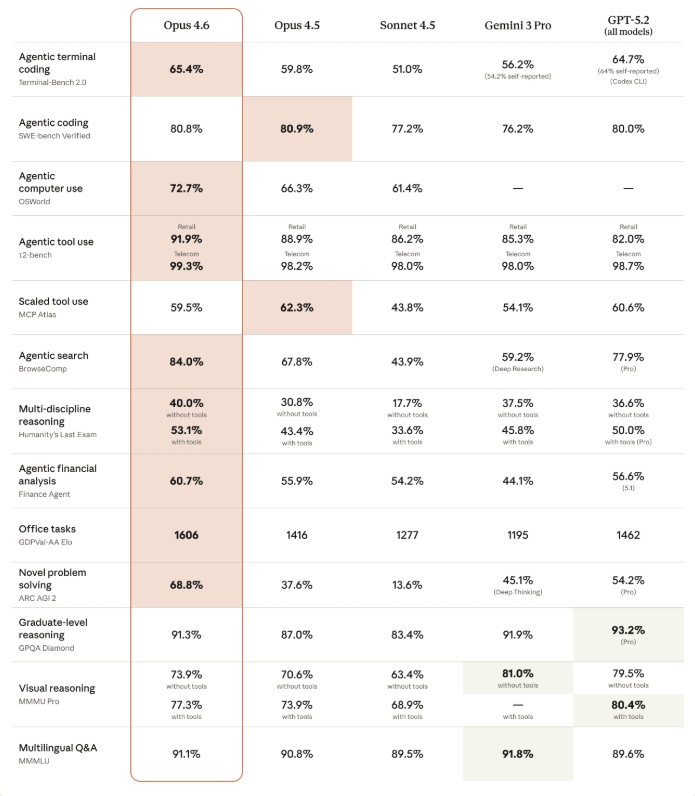
Opus delivers top-tier intelligence, ideal for intricate coding challenges, and reflects this in its higher subscription plans. Sonnet strikes a superb balance, offering strong performance for general development at a more accessible price. Haiku provides lightning-fast responses and minimal Claude pricing, perfect for high-volume, less complex coding needs.
Enterprise vs. Developer Pricing for Claude Code
Anthropic recognizes that the needs of individual developers differ significantly from those of large enterprises, and their Claude Code Pricing reflects this distinction. This tiered approach ensures flexibility and scalability for every user type.
For individual developers or small teams, Anthropic typically offers straightforward, transparent pay-as-you-go subscription plans via their API access. These rates are publicly available and based purely on token usage, making it easy to get started and manage initial Claude costs. This model provides immediate access to powerful AI without long-term commitments, ideal for prototyping and focused development.
Enterprise clients, on the other hand, often require custom solutions, dedicated support, and higher volume processing. Anthropic provides tailored enterprise agreements that can include:
- Volume-based discounts on token usage, leading to more favorable Claude pricing at scale.
- Service Level Agreements (SLAs) guaranteeing uptime and performance.
- Enhanced security features and compliance options.
- Dedicated account management and technical support.
- Private deployments or fine-tuning capabilities.
These specialized arrangements address the unique operational and security demands of larger organizations, ensuring their substantial investment in Claude Code delivers maximum value and fits within their broader cost structure.
Estimating Your Claude Code Usage Costs
Accurately predicting your Claude Code Pricing is essential for effective budget management. While exact figures depend on your specific usage, a systematic approach helps you estimate potential Claude costs.
Follow these steps to get a clearer picture:
- Identify Your Core Use Cases: What will you primarily use Claude Code for? (e.g., generating 100-line functions, debugging 500-line files, answering short coding questions).
- Estimate Average Token Length: Based on your use cases, estimate the average number of input tokens you’ll send per interaction and the average number of output tokens Claude will generate. A good rule of thumb is roughly 4 characters per token for English text, though code can vary.
- Calculate Interaction Frequency: How many times per day, week, or month do you anticipate these interactions?
- Choose Your Claude Model: Decide if you’ll use Haiku (lowest cost, fastest), Sonnet (balanced), or Opus (highest capability, higher cost). Each has different per-token rates.
- Perform a Sample Calculation:
- (Avg. Input Tokens / 1000) * Input Rate per 1k tokens = Input Cost per Interaction
- (Avg. Output Tokens / 1000) * Output Rate per 1k tokens = Output Cost per Interaction
- (Input Cost + Output Cost) * Monthly Interactions = Estimated Monthly Claude Pricing
- Add a Buffer: Always factor in some overhead for unexpected usage or experimentation.
Starting with a small-scale project and monitoring actual usage is also an excellent way to refine your estimates and gain real-world insight into your Claude costs.
Tips for Optimizing Your Claude Code Spend
Mastering Claude Code Pricing involves smart usage strategies. You can significantly reduce your Claude costs without sacrificing performance by implementing these optimization techniques.
- Be Concise with Prompts: Shorter, more focused input prompts mean fewer input tokens. Get straight to the point with your requests.
- Specify Output Length: Guide Claude to produce only the necessary output. Use phrases like “provide a brief explanation” or “generate a 5-line function” to limit output tokens.
- Choose the Right Model: Don’t always default to Opus. Use Haiku for quick, simple tasks or Sonnet for balanced performance, reserving Opus for truly complex, high-value coding challenges.
- Leverage Context Effectively: Instead of re-sending entire codebases repeatedly, manage conversational context. Send only the relevant new information or changes to keep token counts down.
- Cache Responses: For identical or frequently requested outputs, store Claude’s response on your end instead of calling the API again.
- Batch Requests: If your application allows, group multiple smaller, independent requests into a single, larger prompt to potentially reduce overhead on individual calls (though token counts will remain similar).
- Monitor Usage: Regularly check your usage dashboards provided by Anthropic. Understanding where your tokens are going is the first step to optimization.
Proactive management of your requests and model choice will put you in control of your Claude pricing, enhancing your return on investment.
Claude Code Pricing vs. Competitor AI Models
When evaluating Claude Code Pricing, it’s natural to compare it with other prominent AI models in the market. While specific numbers fluctuate, Anthropic generally positions Claude Code as a premium yet competitive option, especially for tasks demanding high reliability, robust reasoning, and safety.
Many competitor models also employ a token-based cost structure. However, differences often emerge in:
- Token Rates: Per-token costs can vary significantly, often reflecting the underlying model’s size, training data, and unique capabilities.
- Context Window: Claude models frequently offer larger context windows, meaning they can “remember” more information from previous interactions, potentially reducing the need for repetitive input and optimizing overall Claude costs for complex projects.
- Performance vs. Price: Some models might offer lower entry-level pricing but compromise on accuracy or speed. Claude aims for a strong balance, particularly with Sonnet and Opus, providing excellent performance for the investment.
- Safety & Alignment: Anthropic’s strong emphasis on AI safety and responsible development is a key differentiator, influencing its value proposition and implicitly its subscription plans.
Ultimately, the “best” pricing depends on your specific use case, desired performance, and willingness to invest in a model known for its robust and reliable outputs. Claude Code often shines in scenarios where clarity, deep understanding, and minimal hallucinations are paramount.
Real-World Use Cases and Their Pricing Implications
Understanding how Claude Code Pricing translates into real-world applications helps in budgeting and strategic planning. Different use cases inherently lead to varying Claude costs due to their unique demands on token usage and model choice.
- Automated Code Generation for New Features: A developer prompts Claude Opus to write a complex new API endpoint. This involves a moderate input (the prompt and relevant context) and potentially a large output (the generated code, tests, and documentation). This use case might incur higher per-interaction Claude pricing due to Opus’s rates and the substantial output tokens.
- Debugging and Error Resolution: A team uses Claude Sonnet to analyze a 500-line codebase snippet for a bug. They input the code and error message (large input) and receive a concise explanation and fix suggestion (moderate output). Sonnet offers a balanced cost structure for this, providing good value for reliable analysis.
- Quick Code Snippet Generation for Daily Tasks: An engineer frequently asks Claude Haiku for small, utility functions or regex patterns. Each request involves minimal input and small, targeted output. The rapid response and low per-token Claude costs of Haiku make this highly efficient for high-volume, quick queries.
- Code Refactoring and Optimization Suggestions: A large codebase is fed to Claude Opus for comprehensive refactoring advice. This entails very high input tokens but might result in a more structured, efficient output suggestion (medium output). The high input cost is justified by the significant long-term savings from optimized code.
By aligning your specific project needs with the right Claude model and managing token usage, you can effectively control your overall Claude Code Pricing.
Understanding Anthropic’s Free Tier and Trial Programs
Anthropic makes it easy for developers and teams to explore Claude’s capabilities before making a significant investment. They typically offer a free tier or trial programs designed to provide hands-on experience with Claude Code Pricing and performance.
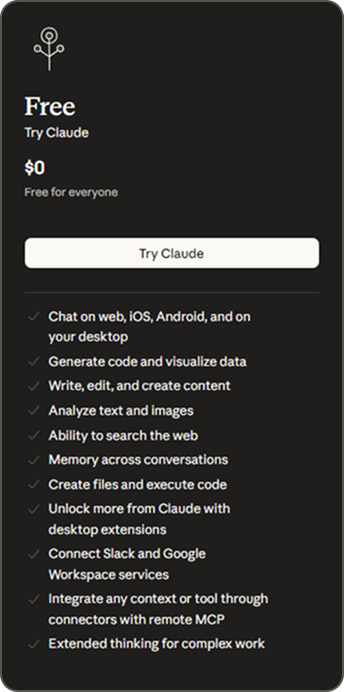
These introductory offerings allow you to:
- Experiment with Models: Test out different Claude models (like Haiku or Sonnet) to see which best fits your specific coding tasks without immediate Claude costs.
- Gauge Token Usage: Get a practical feel for how many input and output tokens your typical prompts and desired responses consume. This is invaluable for estimating future Claude pricing.
- Build Prototypes: Develop small proof-of-concept applications or integrate Claude into existing workflows on a limited scale.
- Experience the API: Familiarize yourself with Anthropic’s API documentation and integration process.
The free tier usually provides a certain amount of free tokens or a limited number of requests per month. Trial programs might offer a credit balance to spend over a specified period. Always check Anthropic’s official documentation for the most current details on their free access and introductory subscription plans. This is your gateway to experiencing the power of Claude Code with minimal initial commitment.
Billing Cycles and Transparency in Claude Code Pricing
Anthropic commits to clear and predictable billing, ensuring you always understand your Claude Code Pricing. Their billing cycles are typically structured on a monthly basis, providing a consistent rhythm for managing your Claude costs.
Here’s what you can generally expect regarding billing and transparency:
- Monthly Invoicing: Usage accumulated over a calendar month is typically consolidated and billed at the end of that month or the beginning of the next.
- Detailed Dashboards: Anthropic provides comprehensive user dashboards. These platforms offer real-time or near real-time tracking of your token usage across different Claude models, allowing you to monitor your Claude pricing as it accrues.
- Usage Breakdown: Invoices and dashboards usually offer a granular breakdown, differentiating between input and output tokens for each model used. This level of detail helps you pinpoint where your Claude costs are originating.
- Alerts and Notifications: You can often set up custom alerts to notify you when your usage approaches a predefined threshold, helping you avoid unexpected overspending.
- Predictable Cost Structure: With per-token rates clearly published, the only variable affecting your bill is your actual usage, making the overall cost structure highly transparent.
This commitment to transparency empowers users to proactively manage their spending and eliminates surprises when reviewing their monthly statements for Claude pricing.
Security and Data Privacy Considerations with Claude Code
Beyond Claude Code Pricing, the security and privacy of your data are paramount when using any AI model. Anthropic places a strong emphasis on these aspects, understanding their critical importance for developers and enterprises alike. This commitment is a core part of their offering and implicitly factored into the overall value proposition, extending beyond mere Claude costs.
Key considerations often include:
- Data Handling Policies: Anthropic clearly outlines how they use (or do not use) customer data to train their models. They generally commit to not using customer prompts or generations for further training without explicit consent.
- Confidentiality: Strong measures are in place to ensure the confidentiality of your proprietary code and information submitted to Claude.
- Encryption: Data is typically encrypted both in transit and at rest, protecting it from unauthorized access.
- Compliance: Anthropic works towards various industry compliance standards and certifications, which are crucial for enterprise clients handling sensitive information.
- Access Controls: Robust internal access controls limit who within Anthropic can view or access customer data.
For specific details on their current security measures, data retention policies, and compliance certifications, always refer to Anthropic’s official security and privacy documentation. These factors are as vital as Claude pricing when selecting an AI partner for your development needs.
Future Trends in Claude Code Pricing and Evolution
The landscape of AI is dynamic, and Claude Code Pricing will undoubtedly evolve alongside it. Anthropic continuously refines its models and cost structure in response to technological advancements, market demands, and competitive pressures. Expect exciting developments that could impact your future Claude costs.
Potential future trends include:
- Model Efficiency Gains: As models become more efficient, the cost per token might decrease over time, making advanced AI more accessible.
- Specialized Model Tiers: We might see even more granular specialization within Claude Code, with micro-models perfectly tuned for very specific tasks, potentially with distinct pricing.
- Context Window Innovations: Further advancements in managing context could reduce the need to repeatedly send large inputs, positively impacting Claude pricing for complex, multi-turn interactions.
- Hybrid Pricing Models: While token-based pricing remains central, Anthropic might introduce new subscription plans or hybrid models that combine usage with fixed feature access or premium support tiers.
- Regional Pricing Variations: As Anthropic expands its global infrastructure, there could be slight regional adjustments to Claude costs based on local operational expenses.
- Increased Enterprise Customization: More bespoke solutions and custom fine-tuning options for large organizations, with tailored pricing packages.
Staying informed about Anthropic’s announcements and API updates will be key to understanding how these trends might shape your long-term Claude Code Pricing strategy.
Frequently Asked Questions About Claude Code Pricing
You’ve got questions about Claude Code Pricing, and we’ve got answers. Here are some of the most common inquiries regarding Anthropic’s cost structure for its powerful AI models.
Q: What is the primary factor determining Claude Code pricing?
A: Your primary cost driver is token usage. This includes both the input tokens you send to the model and the output tokens Claude generates in response.
Q: Are all Claude models priced the same?
A: No, Anthropic offers different models like Opus, Sonnet, and Haiku, each with distinct performance capabilities and corresponding Claude costs per token. Opus is the most capable and typically the most expensive, while Haiku offers the lowest Claude pricing.
Q: How do input tokens differ from output tokens in terms of cost?
A: Input and output tokens often have different rates. Output tokens, which represent the AI’s generated content, can sometimes be more expensive due to the computational effort involved in creation.
Q: Does Anthropic offer a free tier or trial for Claude Code?
A: Yes, Anthropic generally provides a free tier or trial programs, allowing users to experiment with Claude’s capabilities and understand token usage before committing to paid subscription plans. Check their official site for current details.
Q: Can I get discounts for high-volume usage?
A: For enterprise clients or those with very high-volume needs, Anthropic often offers custom agreements and volume-based discounts that adjust the standard Claude pricing.
Q: How can I monitor my Claude Code spending?
A: Anthropic provides a user dashboard where you can track your token usage in real-time or near real-time, helping you manage your monthly Claude costs transparently.
Frequently Asked Questions
What is Claude Code primarily designed for?
Claude Code is a specialized AI model from Anthropic, finely tuned for complex programming tasks such as understanding, generating, and debugging code across various languages, aimed at streamlining development workflows.
How does Anthropic determine Claude Code pricing?
Anthropic uses a usage-based pricing model, primarily charging based on tokens consumed. Costs vary depending on the specific Claude model chosen (Opus, Sonnet, Haiku) and whether the tokens are input (sent to the AI) or output (generated by the AI).
What are the main Claude models and how do their costs compare?
Anthropic offers Claude Opus (highest intelligence, highest cost), Claude Sonnet (balanced performance, medium cost), and Claude Haiku (fastest, good capability, lowest cost). Each is optimized for different task complexities and budget requirements.
Does Anthropic offer a free tier or trial for Claude Code?
Yes, Anthropic typically provides a free tier or trial programs. These allow users to experiment with Claude’s capabilities and understand token usage firsthand before committing to paid subscription plans.
What are some effective strategies to optimize Claude Code spending?
To optimize spending, users should aim for concise prompts, specify desired output length, select the most appropriate Claude model for each task, leverage conversational context efficiently, cache repetitive responses, and regularly monitor their usage dashboards.